
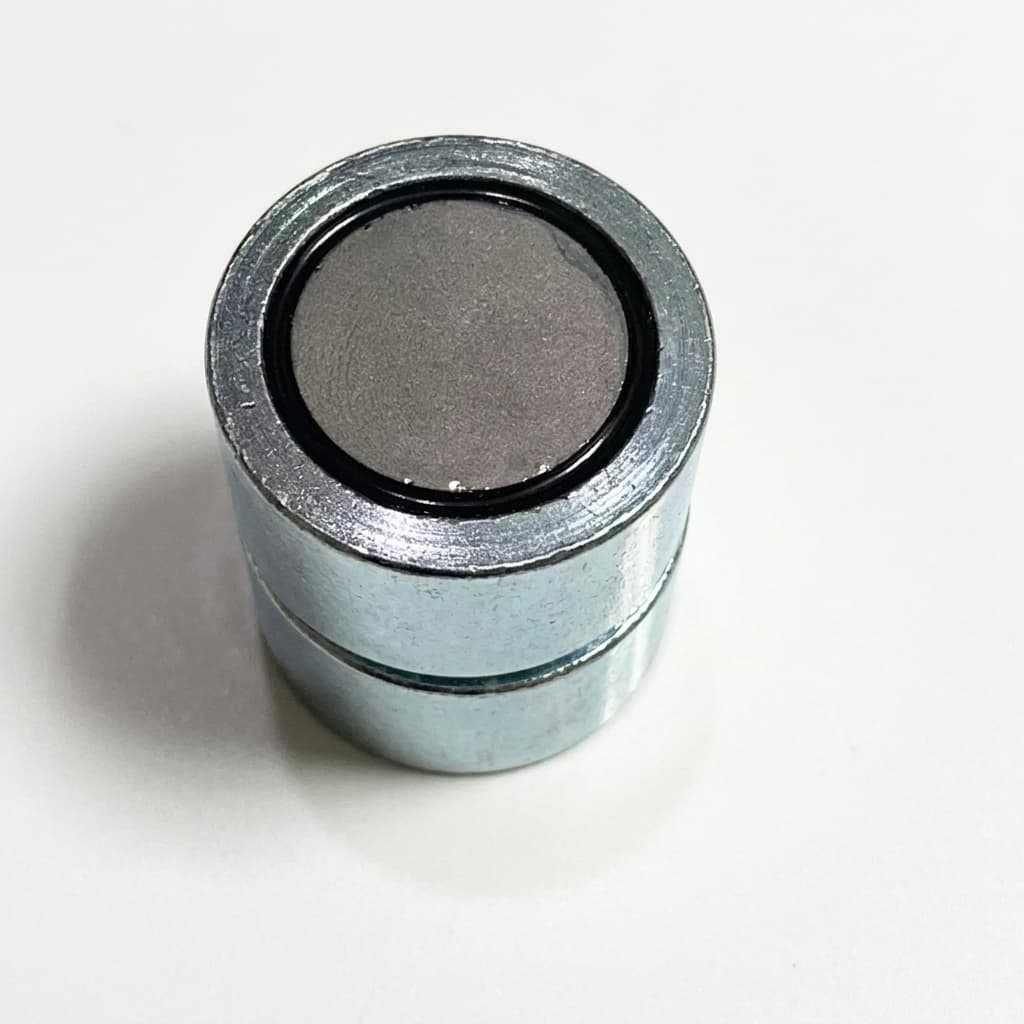
Custom NdFeB Magnet Tolerances: How Over-Specifying Dimensions Drives Up Your Unit Cost
A comprehensive guide for engineers and procurement teams on how to specify NdFeB tolerances correctly to avoid unnecessary diamond grinding costs and yield loss.
It is a common scenario during the RFQ process for custom NdFeB magnets: an engineering team releases a drawing with a blanket ±0.03 mm tolerance applied to all dimensions. The procurement team sends it out to three suppliers and is shocked when the unit cost comes back 40% higher than their initial budget estimate.
When buyers ask suppliers to explain the high cost, the answer is often vague: "The tolerances are tight." But what does that actually mean for the manufacturing floor?
This guide is written for engineers and procurement teams who want to understand exactly how NdFeB magnet tolerances affect manufacturing processes, yield rates, and unit costs. By the end of this article, you will be able to strip unnecessary costs out of your magnet drawings while maintaining strict control over the dimensions that actually impact your final assembly.
Last updated: July 20, 2026. Scope: This guide applies to sintered custom NdFeB magnets for global OEM RFQ work, including blocks, rings, cylinders, arcs, and small precision parts. It does not cover bonded magnets, ferrites, or supplier-specific capability guarantees. Treat the tolerance bands below as DFM budgeting ranges and confirm final limits with your supplier's process capability data, coating stack, and post-coating inspection plan.
The Material Reality: Sintered NdFeB is a Ceramic, Not a Metal
The root of most over-specification issues lies in treating Neodymium Iron Boron (NdFeB) like a standard metal. If you are machining aluminum or mild steel, a CNC mill can hit ±0.05 mm with standard high-speed steel tooling, and the cost difference between ±0.1 mm and ±0.05 mm is often negligible.
Sintered NdFeB does not behave like steel. Structurally, it is a brittle intermetallic compound that resembles a ceramic. You cannot mill it, turn it on a lathe, or drill it with standard high-speed steel bits. If you try, the material will shatter, chip, or overheat (which destroys its magnetic properties).
Instead, NdFeB must be shaped using abrasive processes:
- Slicing: Using diamond-edged abrasive wheels.
- Grinding: Centerless grinding for cylinders, or surface grinding for blocks.
- Core Drilling: Using hollow diamond tools.
- Wire EDM (Electrical Discharge Machining): Used for complex arcs, tight inner radii, or ultra-precision requirements.
Every time you tighten a tolerance on a drawing, you force the manufacturer to switch from a faster process (like multi-wire slicing) to a slower, more expensive process (like precision surface grinding), and you drastically increase the risk of chipping.
The Non-Linear Cost Curve of Tolerances
The relationship between dimensional tolerance and unit cost in NdFeB manufacturing is not linear. It is an exponential curve.
Moving from ±0.1 mm to ±0.05 mm might increase your machining cost by 15%. Moving from ±0.05 mm to ±0.02 mm can easily double the machining cost and cut the factory's throughput in half.
Here is a breakdown of how different tolerance bands dictate the manufacturing reality:
| Tolerance Band | Typical Application | Required Manufacturing Process | Yield / Scrap Risk | Relative Machining Cost | Lead Time Impact |
|---|---|---|---|---|---|
| ±0.10 mm (Standard) | General holding magnets, clearance fits, non-critical arrays. | High-speed multi-wire slicing, standard centerless grinding. | Low. Minor chipping is rare during these controlled baseline operations. | Baseline (1.0x) | Standard |
| ±0.05 mm (Precision) | Sensor triggers, tight press fits, standard motor rotors. | Slower slicing feeds, secondary surface grinding, fine-grit wheels. | Moderate. Requires more frequent wheel dressing and dimensional checks. | 1.15x - 1.30x | +1 to 2 days |
| ±0.03 mm (High Precision) | High-speed balanced rotors, precision optical actuators. | Multiple grinding passes, temperature-controlled coolant, slow feed rates. | High. Brittle edges are highly susceptible to micro-fractures during fine grinding. | 1.8x - 2.5x | +3 to 5 days |
| ±0.02 mm (Ultra-Tight) | Aerospace sensors, medical positioning actuators, precision voice coil motors. | Wire EDM, specialized lapping, 100% manual micrometer inspection. | Severe. Yield loss can exceed 30% due to micro-chipping or geometric drift. | 3.0x - 5.0x | +7 to 14 days |
| ±0.01 mm (Extreme) | Specialized scientific instruments, typically unnecessary for commercial use. | Specialized lapping and polishing. Extreme process control required. | Extreme. Often requires 200% sorting (inspecting the same part twice). | 10x+ | Custom |
| As-Sintered (No finish) | Raw blocks before slicing. Not sold directly to end-users. | Sintering only, accounting for severe shrinkage during the baking phase. | N/A | N/A | N/A |
Note: The relative machining costs above apply specifically to the machining portion of the total unit price. If the magnet is made of an expensive heavy-rare-earth grade (like EH or AH), the raw material cost will buffer the percentage impact of machining. For standard grades (N35 to N42), machining is a massive component of the final price.
Process Drivers: Where the Money Actually Goes
To optimize your RFQ, you need to understand which features trigger the most expensive processes.
1. Outer Diameter (OD) vs. Inner Diameter (ID) Grinding
If you are buying a ring magnet, achieving a tight tolerance on the Outer Diameter (OD) is relatively cheap. Suppliers use centerless grinding, passing hundreds of rings through grinding wheels simultaneously. However, tightening the Inner Diameter (ID) tolerance is extremely expensive. ID grinding requires mounting each individual piece on a fixture or using specialized inner-grinding tools, which is a slow, piece-by-piece operation. If you need a tight fit on a shaft, consider applying the tight tolerance to the shaft itself (if it is steel, it is cheaper to machine) rather than the magnet.
2. Flatness and Parallelism
Specifying a thickness tolerance of ±0.05 mm is standard. Specifying a parallelism tolerance of 0.02 mm across a 50 mm block is very difficult. NdFeB warps slightly during sintering. Correcting this requires double-disk surface grinding, where both sides of the magnet are ground simultaneously at very slow speeds to prevent thermal cracking.
3. Chamfers and Edge Breaks
Sharp edges on NdFeB magnets are stress concentrators. During handling, plating, or assembly, a sharp 90-degree edge will almost certainly chip. This is why manufacturers apply chamfers (e.g., 0.2 mm x 45°) or radii.
If you specify a very precise chamfer tolerance (e.g., 0.2 mm ±0.05 mm), you force the supplier to use custom-profiled grinding wheels rather than standard vibratory tumbling. Always leave chamfer dimensions as "reference" or apply a loose tolerance like 0.1 - 0.4 mm unless it is a critical mechanical mating surface.
The Hidden Variable: Coating Thickness
One of the most frequent errors in NdFeB drawings is ignoring the plating thickness in the tolerance budget.
NdFeB oxidizes rapidly and must be coated. The most common coating is Nickel-Copper-Nickel (Ni-Cu-Ni), which typically adds 10 to 20 microns (0.01 - 0.02 mm) per surface. If you specify an overall dimension of 10.00 mm ±0.03 mm, the supplier must grind the bare magnet to roughly 9.97 mm, hoping that the plating bath adds exactly 0.015 mm to each side to hit your nominal dimension.
Electroplating is not a perfectly uniform process. Edges build up thicker coating layers than flat surfaces (the "dog-bone" effect). If your mechanical tolerance is ±0.03 mm, the natural variation in the plating bath will consume more than half of your tolerance budget, leaving the mechanical grinding floor with an impossible target.
If you must have ultra-tight dimensions, consider using a thinner coating like passivation or a very controlled thin-film zinc, though these sacrifice corrosion resistance. Epoxy coatings are thicker (often 15 to 30 microns) and exhibit more thickness variation than Nickel, making tight tolerances even harder to hold.
Visualizing the Cost vs. Tolerance Spike
The following diagram illustrates how aggressively costs rise when tolerances cross the ±0.05 mm threshold, primarily driven by yield loss (chipping) and the shift to slow-feed machining.
Measurement Risks: CMM vs. Micrometers
When tolerances drop below ±0.05 mm, the method of measurement becomes a source of conflict between buyers and suppliers.
A standard digital micrometer applies localized pressure to the part. Because NdFeB is brittle, snapping a micrometer shut too aggressively on the edge of a magnet can cause micro-fractures. Furthermore, if the operator measures over a minor plating node (the "dog-bone" effect mentioned earlier), the part may read out of spec, even if the structural core is perfectly machined.
Coordinate Measuring Machines (CMM) with touch probes are safer, but the probe tip must be programmed to avoid edge chamfers. Optical measurement systems (like Keyence vision systems) are ideal because they apply zero physical force, but they are highly sensitive to surface reflectivity, meaning shiny Nickel plating can cause glare and false readings.
Best Practice: If you specify a tolerance of ±0.03 mm or tighter, you must state the measurement method and location on the drawing (e.g., "Measure thickness at dead center using flat-anvil micrometer"). Otherwise, your incoming inspection team and the supplier's outgoing quality control will reject/approve the same lot using different tools.
A Buyer's DFM Checklist for NdFeB Magnet RFQs
Before releasing a custom magnet drawing for quoting, run it through this checklist. If you can check all these boxes, you are likely avoiding unnecessary cost penalties.
- Are functional surfaces separated from non-functional surfaces? Apply tight tolerances only to the mating surfaces. Leave air-gap surfaces at
±0.1 mm. - Is the ID tolerance loose? If using a ring magnet, try to accommodate variance on the magnet ID by tightening the tolerance on the mating steel shaft instead.
- Are dimensions "Post-Coating"? Explicitly state on the drawing: All dimensions apply AFTER coating.
- Are chamfers set as reference dimensions? Avoid applying strict tolerances to edge breaks. Use
0.2 mm MAXor a loose range like0.1 - 0.3 mm. - Is the assembly method accounted for? If you are using adhesive bonding, a looser tolerance of
±0.1 mmis actually better because it leaves room for the epoxy layer. Tight press fits (±0.02 mm) are dangerous for brittle magnets and often result in cracking during assembly. - Have you challenged the default title block? Did engineering accidentally leave a title block default of
XX.XX = ±0.01 mm? If so, have them override it.
If your current RFQ has more than two dimensions tighter than ±0.05 mm, ask for a DFM review before comparing supplier prices. That review should separate functional surfaces from non-functional surfaces, define whether dimensions are pre- or post-coating, and align the inspection method before the quote is frozen.
Frequently Asked Questions (FAQ)
Q: Can I achieve ±0.01 mm on a Neodymium magnet?
A: Yes, it is physically possible using wire EDM or specialized lapping, but it is extremely expensive. Unless you are building aerospace sensors or specialized optical voice coil motors, it is almost never worth the cost. Always try to design compliance into your assembly rather than forcing it onto the brittle magnet.
Q: Why does my supplier quote a higher scrap rate for my small 2 mm x 2 mm magnets?
A: Small magnets have very little mass and are difficult to hold securely during grinding. They also tumble violently during the electroplating barrel process, making them highly susceptible to edge chipping. The tighter the tolerance, the more handling they require, which drives scrap rates exponentially higher for micro-magnets.
Q: Does the magnetic grade affect machinability?
A: Generally, yes. Higher temperature grades (like SH, UH, EH) have different grain boundary structures and slightly different mechanical hardness profiles. However, the difference in machining cost between grades is negligible compared to the cost impact of changing a tolerance from ±0.1 mm to ±0.03 mm.
Q: If I use a block shape instead of an arc segment, will my tolerances be cheaper to hold? A: Absolutely. Flat surfaces on blocks can be processed in large batches using double-disk surface grinders. Arc segments require complex profiling tools or Wire EDM, meaning every dimension is harder and slower to hold.
Final Thoughts and Next Steps
Specifying tolerances on a NdFeB magnet is an exercise in compromise. Every micron of precision you demand must be paid for in cycle time, diamond tool wear, and scrap rates. By treating the magnet as a ceramic rather than a metal, isolating your critical mating surfaces, and allowing the coating process enough breathing room, you can strip massive amounts of hidden cost out of your RFQs.
If you are unsure whether your current drawing is driving up your unit prices, let us help.
Send your preliminary drawings to our engineering team at [email protected] or reach out via WhatsApp at +8618857971991. We provide free Design for Manufacturability (DFM) reviews to identify over-specified tolerances before you lock in your supply chain.
References & Further Reading
For additional industry context on machining brittle materials and sourcing custom magnets, consult the following resources:
- Arnold Magnetic Technologies: Permanent Magnet Manufacturing Process
- Magnetics Magazine: Grinding Rare Earth Magnets Into Shape
- Stanford Magnets: Tolerance Limits for Different Magnet Processes
- Stanford Magnets: Magnet Coating Options
- Eclipse Magnetics: Standard NdFeB Range Datasheet
- How to Define Magnetization and Coating in Your RFQ
Author

Categories
More Posts
How to Define Magnetization and Coating in Your NdFeB RFQ
A buyer-side specification framework for magnetization and coating that reduces quote ambiguity and lowers sample failure risk.
Evaluating NdFeB Coating Reliability: A Buyer's Guide to SST, PCT, and Edge Chamfering
Specify custom NdFeB magnet coatings with SST, PCT, and chamfer checks. Use this buyer guide to reduce corrosion risk before RFQ.
NdFeB Shape Selection Guide for OEM RFQ
A buyer-side playbook to choose NdFeB shapes, define RFQ inputs, and compare suppliers with fewer clarification loops and faster sample closure.